Chimney Flashing & Leak Repair in Maryland
Step flashing, counter flashing, ice and water shield, and cricket installs. Root-cause leak diagnosis — not tar patches that fail in two seasons.
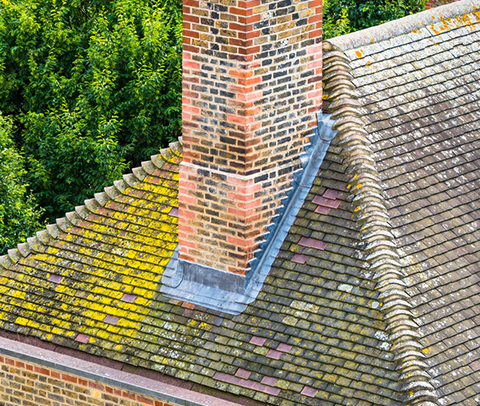
About Our Flashing Service
Most chimney leaks are flashing leaks, and most flashing leaks are misdiagnosed. Maryland homeowners regularly hire roofers or handymen who slap roofing tar on a failed flashing, charge $400, and disappear before the next thunderstorm proves the patch worthless. Eagle Chimney Service approaches chimney flashing the way it should be done — diagnose where water actually enters, remove failed materials completely, rebuild the flashing system to code, and warranty the result in writing.
Proper chimney flashing is a two-part system. Step flashing consists of L-shaped pieces of metal woven into each course of shingles where they meet the chimney, with the vertical leg riding up the chimney face. Counter flashing is a second piece set into a horizontal reglet cut in the mortar joint of the chimney, lapping down over the top of the step flashing to direct water away from the joint. Both pieces are essential. Step flashing without counter flashing leaves the top edge of the metal exposed to water that runs down the chimney face. Counter flashing without step flashing leaves the shingle-to-chimney joint open. Tar over either piece is a stopgap that fails within two to four Maryland winters.
For chimneys wider than 30 inches measured perpendicular to the roof slope, the International Residential Code requires a cricket — a small peaked structure built on the upslope side of the chimney to divert water and snow around it rather than letting it pile against the chimney. Many older Maryland chimneys lack crickets and suffer chronic leaks at the upslope flashing as a result. We build crickets with shingled or metal-clad slopes appropriate to the surrounding roof and integrate them properly with the step and counter flashing system.
A proper flashing repair starts with finding where water actually enters. We may run a hose test from above, examine the attic for staining patterns, and look for telltale signs — rust on flashing edges, separated joints between flashing pieces, pulled-out counter flashing, missing reglet cuts, and tar accumulations that hide deteriorated metal beneath. Once root cause is identified, we remove all failed materials, install ice and water shield as a secondary barrier under the new flashing, weave new step flashing into the shingle courses, cut a fresh reglet into the mortar joint for counter flashing, and seal the reglet with high-temperature, UV-stable sealant rated for masonry application. The result is a flashing system that lasts as long as the surrounding roof.
Flashing Pricing
Transparent, upfront pricing. Final cost depends on door type, size, and specific conditions. Free estimates available.
* Prices shown are estimates. Actual pricing may vary based on door type, size, parts, and labor. We provide an exact quote before beginning any work.
What to Expect
Our straightforward process from first call to job completion.
Leak Diagnosis
We inspect from inside the attic, on the roof, and from below. A controlled hose test isolates the leak source. Photos document conditions before any work begins.
Scope & Quote
You receive a written quote specifying flashing material, ice and water shield, cricket requirement (if applicable), reglet cut, and sealant grade. Warranty terms in writing.
Demo & Underlayment
Existing flashing and any failed shingles are removed. Self-adhering ice and water shield is installed on the deck around the chimney as a redundant moisture barrier.
Flashing Installation
Step flashing woven into shingle courses. Reglet cut into mortar joint at proper height. Counter flashing inserted and sealed. Cricket framed and clad where required.
Hose Test & Warranty
Final hose test verifies dry installation. Photos and written workmanship warranty registered in your name.
When to Call Us
Watch for these warning signs. Early attention prevents costly damage and keeps your family safe.
Brands We Service
factory-trained on all major chimney, fireplace, insert, and cap brands.
What's Included
Every job is backed by our 100% satisfaction guarantee, licensed technicians, and fully equipped service trucks.
Why Choose Eagle Chimney Service
Licensed & Insured
Fully licensed, bonded, and insured for your peace of mind. 13+ years in business.
Same-Day Service
Fully equipped trucks dispatched to your location. Most repairs completed in a single visit.
Upfront Pricing
No hidden fees, no surprises. We provide a clear quote before any work begins.
Frequently Asked Questions
Quick answers to common chimney questions.
Warning signs include cracks in the crown, crumbling material at the crown edges, spalled or flaking brick faces, missing mortar joints, efflorescence (white salt deposits) on exterior brick, water stains inside the house adjacent to the chimney, rust on the damper, and any visible lean or step crack in the chimney structure. Most repairs are far less expensive caught early.
Crown repair is the highest-leverage chimney repair dollar a homeowner can spend. The crown is the slab at the top that sheds water away from the chimney masonry. When the crown fails, water flows directly into the chimney chase, damaging every component below. Fixing the crown stops the damage at its source.
CrownCoat is a flexible elastomeric coating applied over an existing intact crown with hairline cracks. It seals the cracks, stays flexible through freeze-thaw, and carries a 15-year warranty. A full rebuild is required when the crown is structurally compromised, missing material, or was built without proper overhang and drip edge. Rebuilds use poured concrete with mesh reinforcement and last 40-60 years.
ChimneySaver is a vapor-permeable masonry repellent. It lines each masonry pore with a hydrophobic chemistry that beads liquid water on contact while still allowing water vapor to pass through in either direction. Silicone sealers and paint coatings trap vapor inside the masonry, and the first freeze after application spalls every brick that had moisture inside. ChimneySaver is the right category. Silicone is wrong.
Almost certainly yes. An uncapped flue lets rain, snow, animals, embers, and downdrafts into the chimney. Once water enters the flue, it dissolves mortar between clay tiles, rusts the damper, and spalls the smoke chamber. A $400 stainless cap installed today routinely prevents $4,000 in liner damage three winters from now.
Most chimney leaks are flashing leaks, and most flashing leaks are misdiagnosed. We diagnose root cause (hose test, attic inspection, photo documentation), then rebuild step and counter flashing properly with ice and water shield underneath. Tar patches are stopgaps that fail within 2-4 winters. Proper flashing lasts the life of the roof.
Tuckpointing failed mortar joints runs $450-$2,495 depending on linear footage and access. We grind out failed joints to a minimum depth of 3/4 inch, brush clean, dampen, and re-tuck with Type N or Type S mortar matched to the original color and profile. Historic chimneys with lime-rich joints use historically appropriate mixes.
A cricket (also called a saddle) is a small peaked structure built on the upslope side of the chimney to divert water and snow around it. The IRC requires a cricket on any chimney wider than 30 inches measured perpendicular to the roof slope. Many older Maryland chimneys lack crickets and suffer chronic upslope leaks as a result.
Other Services
Explore our full range of chimney solutions.
Chimney Sweep & Cleaning
From $189
Chimney Inspection (Levels 1, 2 & 3)
From $129
Chimney Cap Installation
From $225
Chimney Crown Repair & Rebuild
From $375
Chimney Waterproofing
From $325
Chimney Relining (Stainless Steel & Cast-in-Place)
From $1,800
Chimney Masonry Repair & Rebuilding
From $450
Fireplace Installation & Service
From $599
Damper Repair & Installation
From $175
Commercial Chimney Services
From $399
HeatShield® Cerfractory Chimney Relining
From $1,400
ChimneySaver® Waterproofing Application
From $325
Chimney Insurance Claim Inspection & Repair
From Quote-Based
Chimney Leak Detection & Diagnostic
From $229
NFPA 211 Level 1 Chimney Inspection
From $129
NFPA 211 Level 2 Chimney Inspection (Real Estate & Post-Event)
From $325
Dryer Vent Cleaning & Inspection
From $149
Wood Stove Installation (EPA-Certified)
From $1,200
Wood-to-Gas Fireplace Conversion
From $3,500
Chimney Animal Removal & Damage Repair
From $249
Flashing Available Across 30+ Maryland Cities
We provide flashing service in Beltsville, Silver Spring, Columbia, Bethesda, Rockville, Laurel, and many more Maryland communities. See our transparent pricing or read our chimney care guides.
View All Service AreasReady to Get Started?
Call now for a free estimate or book your appointment online. We respond fast — day or night.